
Summary
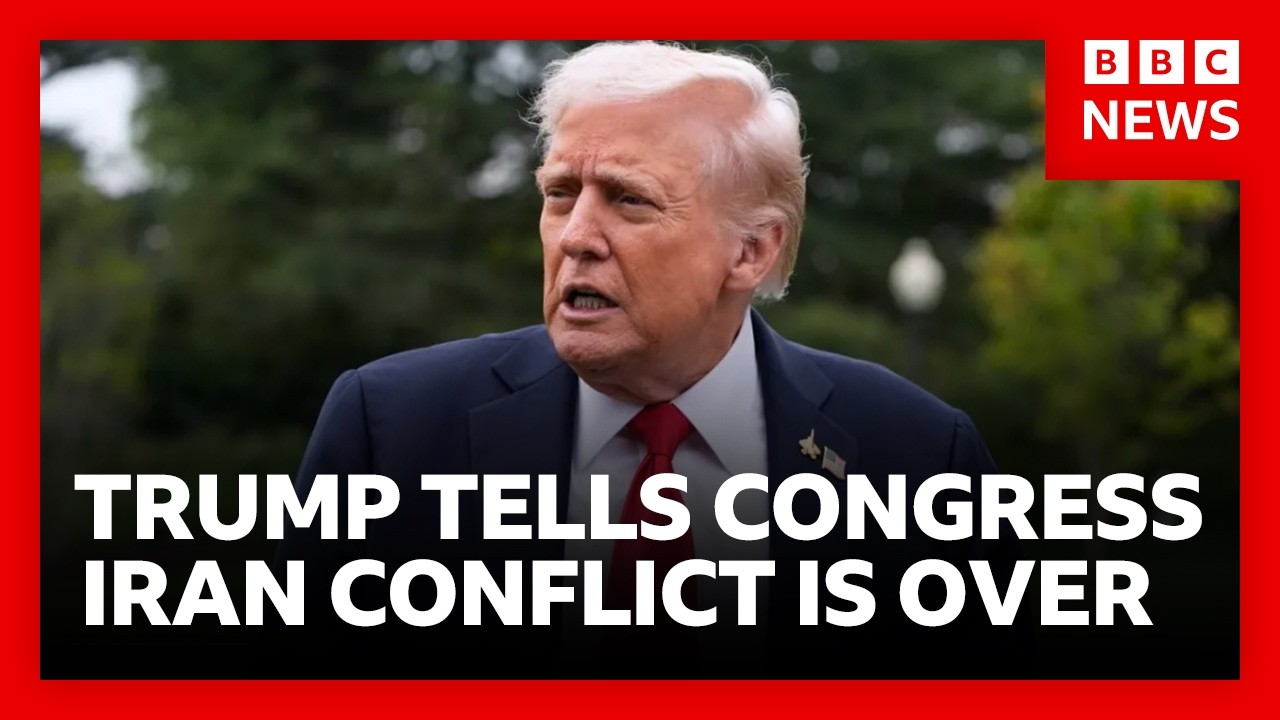
In a move that sidesteps congressional oversight, **President Donald Trump** informed lawmakers on **May 1, 2026**, that the conflict with **Iran** has been "terminated." This declaration arrives precisely as the **60-day deadline** mandated by the [[war-powers-resolution|War Powers Resolution]] for seeking congressional authorization for military action expires. The letter, obtained by Politico, asserts that no further congressional action is required, a stance that is already drawing sharp criticism from members of Congress and legal scholars concerned about the erosion of legislative power in matters of war. This action sets the stage for a significant constitutional debate regarding the balance of power between the executive and legislative branches in initiating and continuing military engagements abroad.
Key Takeaways
- President Trump declared the conflict with Iran 'terminated' to bypass a congressional authorization deadline.
- The declaration comes as the 60-day limit under the War Powers Resolution expires.
- This move is expected to spark significant constitutional debate over executive versus legislative war powers.
- The administration's interpretation of 'terminated' is a key point of contention.
- The long-term implications for U.S. foreign policy and congressional oversight remain uncertain.
Balanced Perspective
The President's letter to Congress marks a critical juncture in the application of the [[war-powers-resolution|War Powers Resolution]]. The 60-day clock for military actions without congressional approval has expired, and the administration's interpretation is that the conflict has concluded, thus negating the need for further authorization. This interpretation hinges on the definition of 'termination' and whether the ongoing actions, if any, constitute continued hostilities. Congress now faces the decision of whether to challenge this assertion, potentially through legislative means or legal action, to uphold its constitutional role in declaring war and authorizing military force.
Optimistic View
This declaration represents a decisive executive action to de-escalate a potentially protracted conflict, demonstrating the President's commitment to avoiding open-ended wars. By formally ending the engagement within the statutory timeframe, **President Trump** is adhering to the spirit of the [[war-powers-resolution|War Powers Resolution]] while asserting the executive's prerogative to manage foreign policy and national security. This allows for a swift return to diplomatic channels without the encumbrance of potentially divisive congressional debates, ultimately serving American interests by preventing further entanglement.
Critical View
This unilateral declaration by **President Trump** represents a significant overreach of executive power, effectively nullifying the [[war-powers-resolution|War Powers Resolution]] and undermining Congress's constitutional authority to declare war. By declaring the conflict 'terminated' without clear evidence of cessation of hostilities or a formal peace agreement, the President is creating a dangerous precedent that allows the executive branch to engage in prolonged military actions indefinitely without legislative consent. This move could embolden future administrations to bypass Congress entirely, leading to a further concentration of war-making power in the presidency and increasing the risk of undeclared, protracted wars.
Source
Originally reported by Politico